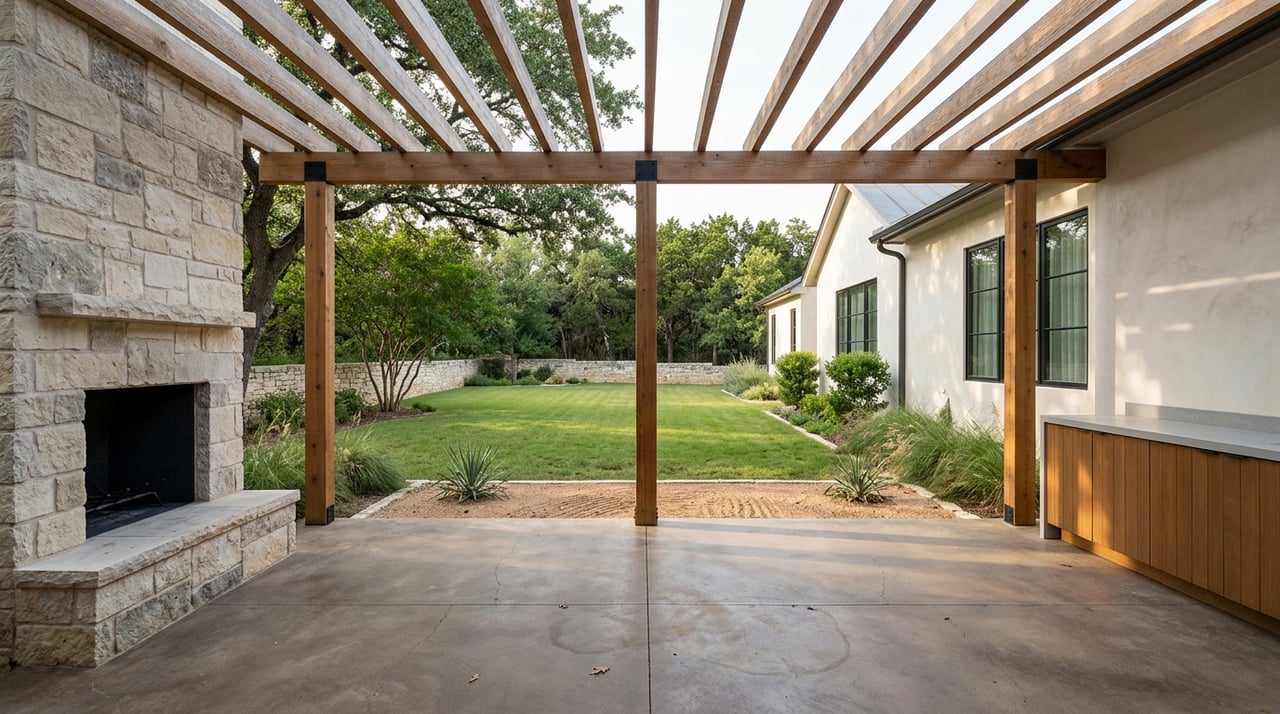
Thinking about trading Austin’s scale for a little more breathing room? If you’re considering a move to Georgetown, you’re likely weighing lifestyle, commute, housing, and day-to-day convenience all at once. The good news is that Georgetown offers a very different rhythm while still keeping you connected to the greater Austin area. Let’s dive into what that move can really look like for you.
Georgetown feels smaller and less dense
One of the biggest changes you’ll notice is scale. Georgetown’s estimated population was 101,344 in 2024, while Austin’s was 993,588. Population density also looks very different, with Georgetown at 1,171.7 people per square mile compared with Austin at 3,006.4.
That usually translates into a more small-city feel in Georgetown. You may notice less overall density, more separation between neighborhoods, and a pace that feels a bit less urban. At the same time, Georgetown is not standing still. It grew by 50.3% from 2020 to 2024, compared with Austin’s 3.3%, so you are moving into a place that is still evolving quickly.
Georgetown also has an older age profile than Austin. In the latest Census figures, 26.2% of Georgetown residents were 65 or older, compared with 10.4% in Austin. That does not define the city on its own, but it does help explain why Georgetown can feel different in pace and community mix.
Commute planning matters more than you think
If you will still work in Austin, your commute should be one of the first things you test before choosing a home. Georgetown sits along Interstate 35 and also connects to SH 130, which gives drivers practical access north and south. The city’s community guide also highlights proximity to Austin-Bergstrom International Airport, which can matter if you travel often.
Even with that access, Georgetown is still a drive-first location for many households. The mean travel time to work was 28.2 minutes in Georgetown, compared with 23.7 minutes in Austin. Those numbers are citywide averages, not your exact commute, but they do suggest that longer everyday travel times can be part of the tradeoff.
Transit is another key difference. Austin offers a broader transit network, while Georgetown’s options are more limited. CapMetro’s commuter rail runs from Leander to downtown Austin, and Georgetown riders often rely more on driving, park-and-ride options, or CARTS connections than on a direct rail route.
Test your real route before you buy
Before you make an offer, map your likely drive during the times you would actually travel. A home that looks ideal on paper can feel very different when you factor in school drop-offs, office schedules, or regular airport trips.
This is especially important if more than one household member commutes in different directions. In a move from Austin to Georgetown, location inside the city can shape your routine just as much as the city choice itself.
Housing looks different in Georgetown
For many buyers, housing is the biggest reason to consider Georgetown. Median home values were lower in Georgetown than in Austin, at $429,100 versus $555,300. Median monthly owner costs with a mortgage were also lower, at $2,328 in Georgetown compared with $2,679 in Austin.
That said, renters should not assume Georgetown is automatically less expensive. Median gross rent was slightly higher in Georgetown at $1,795, compared with $1,729 in Austin. If you are renting before buying, or comparing short-term options, that is worth keeping in mind.
Interestingly, median household income was fairly similar in both cities. Georgetown stood at $95,062 and Austin at $93,658. That suggests the housing difference is tied more to the structure of the market than to a major income gap between the two cities.
Expect a more owner-occupied feel
Georgetown has a much higher homeownership rate than Austin. The Census reported 69.5% homeownership in Georgetown versus 43.4% in Austin.
For you as a buyer, that can shape how neighborhoods feel over time. In many areas, it may mean a housing mix that leans more heavily toward owner-occupied homes and longer-term residents.
Housing character can vary by area
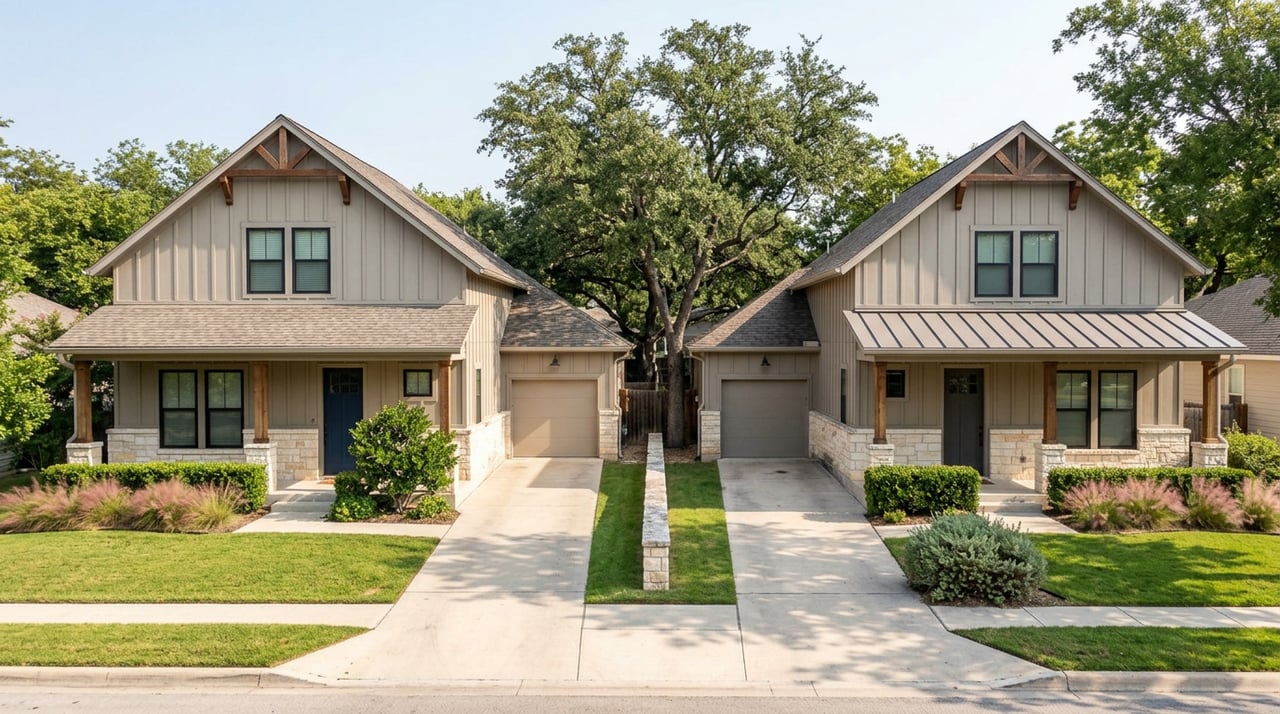
Georgetown’s housing stock also tells a different story than Austin’s denser citywide profile. The city’s historic survey notes that many postwar neighborhoods include Ranch and Minimal Traditional single-family homes. Lot sizes vary, with some areas offering smaller lots and others providing more spacious settings.
Downtown Georgetown adds another layer to that character. The Town Square Historic District is centered around a nine-square-block core near the courthouse, creating a walkable, distinctly historic setting that feels very different from most suburban development patterns.
Downtown Georgetown offers a distinct lifestyle
If you love the idea of having a recognizable city center, Georgetown stands out. Its Town Square Historic District is a pedestrian-friendly, retail-oriented core built around the courthouse. The broader downtown Cultural District spans 40 blocks and includes more than 100 restaurants, wineries, shops, and galleries.
Downtown is also home to major civic destinations like the Palace Theatre, Georgetown Public Library, Georgetown Arts Center, and Williamson Museum. In practical terms, that means downtown is not just decorative. It functions as an active part of everyday life.
A city parking study also notes that downtown Georgetown serves as an employment center for city and county government. County facilities such as the courthouse, justice center, sheriff’s office, and EMS are concentrated there, which reinforces downtown’s role as both a destination and a civic hub.
Outdoor access is part of daily life
For many people relocating from Austin, Georgetown’s outdoor amenities are a major draw. The city reports more than 1,000 acres of parkland, more than 50 parks, five pools, and a growing trail system. Destinations like Lake Georgetown and Garey Park add to that appeal.
Garey Park alone covers 525 acres. It includes a playground, splash pad, dog park, equestrian arena, fishing ponds, and more than seven miles of hiking and equestrian trails. If your next chapter includes more outdoor time, Georgetown gives you a strong set of options close to home.
Everyday services stay close to home
A move outside Austin often raises questions about convenience. In Georgetown, many essential services remain local. St. David’s Georgetown Hospital is a 118-bed facility with a 24-hour emergency department and Level IV Trauma Center, which can make routine and urgent care more accessible without heading into Austin.
The city also operates its own electric and water utilities. Georgetown Executive Airport serves general and corporate aviation, adding another layer of local infrastructure that supports the city’s growth and day-to-day function.
For households comparing city scale, school district size also reflects that difference. Georgetown ISD serves more than 13,800 students across 11 elementary, four middle, three high, and two alternative campuses. Austin ISD serves nearly 70,000 students across 114 school communities.
What moving from Austin to Georgetown really means
In many cases, this move is less about leaving Austin behind and more about choosing a different daily experience. Georgetown offers a smaller city, lower density, a more owner-occupied housing mix, a historic downtown square, and strong outdoor amenities. Austin still offers the stronger fit if you want denser urban living, broader transit access, and a much larger city network.
That is why the best question usually is not which city is better. It is which setting matches the way you want to live. If you want more space, a distinct downtown, and a smaller civic scale while staying connected to the Austin area, Georgetown may be a very natural next step.
If you’re weighing neighborhoods, commute patterns, or the kind of home that fits your next season, Lockie Ealy can help you make a confident move with local guidance tailored to your goals.
FAQs
What is the biggest lifestyle difference between Austin and Georgetown?
- Georgetown is smaller, less dense, and more owner-occupied than Austin, with a historic downtown square and a different overall pace.
What should buyers know about commuting from Georgetown to Austin?
- Georgetown has strong highway access via Interstate 35 and SH 130, but transit is more limited than Austin, so many commuters rely on driving, park-and-ride options, or CARTS connections.
Is housing cheaper in Georgetown than in Austin?
- Median home values and median monthly owner costs with a mortgage are lower in Georgetown, but median gross rent is slightly higher, so the answer can depend on whether you plan to buy or rent.
What is downtown Georgetown like for new residents?
- Downtown Georgetown includes a pedestrian-friendly Town Square Historic District and a 40-block Cultural District with more than 100 restaurants, wineries, shops, and galleries, along with civic and cultural destinations.
What amenities does Georgetown offer for outdoor living?
- Georgetown offers more than 1,000 acres of parkland, more than 50 parks, five pools, a growing trail system, Lake Georgetown, and the 525-acre Garey Park.
Why do people move from Austin to Georgetown?
- Many buyers are looking for a smaller-city feel, more space, a more owner-occupied housing mix, and access to Georgetown’s downtown, parks, and regional connections while remaining within the greater Austin area.