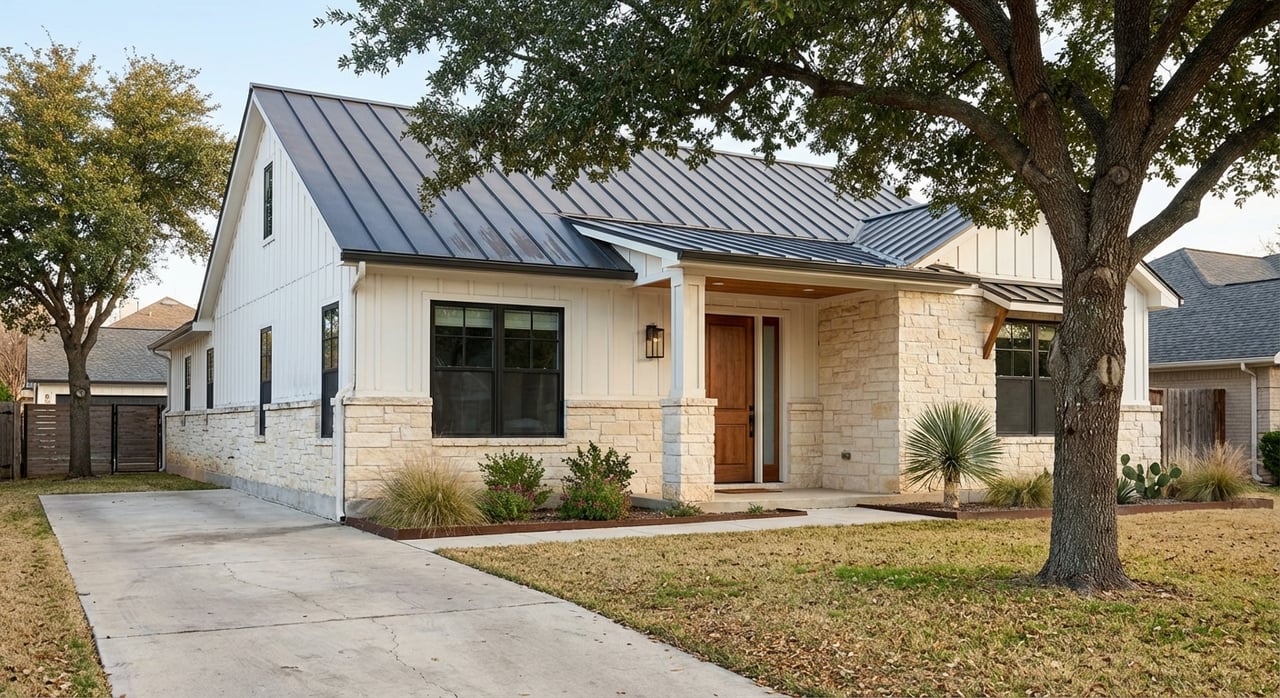
Are you outgrowing your current Georgetown home but unsure how today’s market will treat your next move? You are not alone. Many local owners want more space or different amenities, yet they also want clear facts on prices, timing, and financing. In this guide, you will see the trends move-up buyers should watch, from price bands and inventory pockets to smart negotiation and neighborhood checks. Let’s dive in.
Georgetown market snapshot
Georgetown’s price readings vary by source and method, so look at more than one number and note the date. Zillow’s local home-value index for Georgetown was about $423,585 as of January 31, 2026, while Redfin reported a ~$395,000 median sale price for January 2026. Homes are taking longer to sell than a few years ago, with median time on market commonly ~90 to 125 days in recent snapshots. At the county level, Williamson County’s 2025 median hovered around $415K–$417K, with inventory trending toward a balanced market rather than the 2021–22 seller surge. You will find more selection and more room to negotiate than during the peak years.
Mortgage rates shape buying power. National 30-year fixed averages were near ~6.1% in early February 2026, which helps compared with 2024–25 highs but is still higher than 2020–21 lows. Plan your budget with today’s rate range in mind.
Inventory patterns to watch
City vs. county scale
Active listings in Georgetown have been elevated compared with the frenzy years. Countywide, the Austin Board of REALTORS’ UnlockMLS data shows Williamson County moving toward balance, with months of inventory generally in the 3 to 6 month range depending on the month and price band. For broader context on county trends, review the Austin Board of REALTORS® Central Texas report for late 2025 at the UnlockMLS site. The December 2025 report is a helpful benchmark.
ZIP-level differences
Not all ZIPs move the same way. Georgetown’s 78633 and 78628 often show higher medians and different days on market than 78626. Local reporting in 2025 highlighted month-to-month swings by ZIP, with some areas shifting from tight to more balanced conditions. Expect a different pace for a 4-bedroom in 78633 than for a similar home in 78626.
New construction vs. resale
New-home communities remain a major source of inventory in and around Georgetown. Building activity across Williamson County stayed meaningful through 2025, though slower than the 2021 peak. You can use public indicators such as Census QuickFacts to see how strong the permit pipeline has been in recent years. Review Williamson County’s profile for context.
What this means for you: master-planned neighborhoods may offer builder incentives, HOA amenities, and a specific product mix, which can change pricing and days on market compared with resale homes. Your strategy should reflect whether the area you love is largely new-build or mostly resale.
Price bands for move-up homes
By bedroom count
Aggregated listing data shows a clear split by size. Recent snapshots put many 2- and 3-bedroom homes in the low-to-mid $300Ks, while 4-bedroom homes often land around $480K–$500K. Treat these as planning ranges, then confirm with current comps when you are ready to act.
Neighborhood examples
- Wolf Ranch often trades in the upper $500Ks to $600Ks, depending on phase and product. Days on market are longer than in 2021–22.
- Sun City tends to sit lower, with medians around $380K–$395K. This area is popular with active-adult buyers and is not the typical move-up target for growing households.
- Close-in, walkable options near the Rivery can command premiums. Pricing varies widely by product and block.
- Other pockets across Georgetown, like Fountainwood, Vizcaya, and North Lake, show a wide value range tied to lot size, build era, and custom features.
The takeaway: segment your search by size and by neighborhood type. A 4-bedroom target in Wolf Ranch will behave differently than a 4-bedroom resale in older North Georgetown. Your pricing and negotiation plan should match the submarket.
Timing and pricing strategy
Seasonality still matters. Spring is typically the strongest listing window across the Austin metro, even though specific weeks can shift with local conditions. For a county-level backdrop on supply and tempo as you plan, scan the UnlockMLS December 2025 Central Texas report and pair it with a fresh CMA before you list. Industry coverage also shows spring remains the top season for sellers across many markets. This summary outlines why spring still tends to lead.
On pricing, today’s buyers have more options. Be ready to price competitively and use thoughtful prep to stand out. If you plan to write offers on your next home, longer days on market and the rise in price reductions in 2025 suggest more room to negotiate than during the pandemic surge.
Financing options for moving up
Your move-up plan often comes down to how you bridge timing and cash. Here are common paths, with resources to help you compare.
Sell first
- You sell, collect proceeds, then buy. This reduces financing complexity and debt-to-income pressure, but you may need short-term housing.
HELOC or bridge loan
- A home equity line of credit can provide funds for the next down payment with variable rates and specific underwriting. For a plain-English explainer, see the CFPB’s HELOC guide.
- Bridge loans or buy-before-you-sell programs can unlock convenience at a higher cost. Read a consumer overview of trade-in style programs here: how to buy while selling.
Contingent offer with a kick-out
- With more inventory, sale contingencies can work in some segments, but they still require careful negotiation and realistic timelines.
Financing paths at a glance
- Confirm your expected net proceeds with a market-adjusted net sheet and fresh comps.
- Get pre-approved, including any temporary financing tool you plan to use, so you know your all-in numbers before touring.
- If you want to avoid contingencies, time your sale and purchase closings to overlap by a short window, or use a vetted buy-before-you-sell option and weigh total costs.
Smart negotiation plays
Use the data to your advantage.
- Watch days on market. Homes that sit longer often have more room for negotiation.
- Track price reductions. A reduction history can signal flexibility.
- Mind the submarket. A 4-bedroom in a popular phase of a master-planned community may behave differently than a similar-size resale home across town.
- Tighten terms where it counts. Cleaner inspection asks, flexible closing dates, and strong documentation can help you secure a fair price without overpaying.
Neighborhood checklist for Georgetown
Before you zero in on a block, answer these local questions:
- Typical home and lot sizes, plus HOA rules. Master-planned communities often bundle amenities and have clear design standards. Established areas show more variety.
- School district and tax rate. Georgetown ISD adopted a total tax rate of about $1.0506 per $100 of assessed value for 2025–26. Confirm exact attendance zones and costs for any address. Review GISD tax-rate details.
- City and local taxes. The City of Georgetown adopted an FY2026 city rate around $0.353 to $0.35315 per $100. Your total bill depends on school taxes plus any MUD or special district. See the FY2026 budget and rate coverage.
- Commute and jobs. Regional growth, including major industrial investment in Williamson County, supports suburban housing demand. Learn more about the Samsung Taylor campus.
- New-build or resale dynamics. Builder incentives, HOA amenities, and phase timing can affect value and resale patterns. For county-level context on supply and demand, check UnlockMLS market reporting and pair it with an agent’s local comps.
A simple move-up example
Here is a quick way to frame the numbers before you tour:
- Target home: a typical 4-bedroom in Georgetown often prices around $480K–$500K. A 20% down payment runs $96K–$100K.
- Your current home: many 2- and 3-bedroom homes trade in the low-to-mid $300Ks. Your actual net depends on mortgage payoff, prep costs, and closing fees.
- Plan the bridge: decide whether you prefer to sell first, use a HELOC, or make a contingent offer. Run each path through your lender’s pre-approval so you know your monthly payment at current rates.
- Build a timeline: if you want to avoid a rent-back or temporary housing, align your list date with your purchase search and use flexible closing windows.
The key is to use today’s price bands for planning, then lock in exact comps and a net sheet before you list or write offers.
Your next step
If you are weighing a trade-up in Georgetown, you deserve a plan tailored to your home, your neighborhood, and your next chapter. From price strategy and prep to neighborhood fit and offer terms, we will help you move with confidence. Inspire your next chapter — schedule a consultation with Lockie Ealy.
FAQs
What are current Georgetown home prices in 2026?
- As of January 2026, Redfin reported a city median sale price near $395K, while Zillow’s home-value index read about $423,585 on January 31, 2026. Use both as context and confirm with current comps.
How long do Georgetown homes take to sell now?
- Recent snapshots show median time on market typically ~90 to 125 days, longer than 2021–22, which gives buyers more time and room to negotiate.
How much do 4-bedroom homes cost compared with smaller homes?
- Aggregated listing data commonly places 4-bedrooms around $480K–$500K, while many 2- and 3-bedrooms land in the low-to-mid $300Ks. Always verify by ZIP and neighborhood.
Is new construction a big factor in Georgetown?
- Yes. Master-planned communities supply a meaningful share of inventory, and county-level permit activity has been strong in recent years. Review Census QuickFacts for context and compare builder incentives with resale options.
When is the best time to list my current home?
- Spring is typically the strongest listing season in the Austin metro, supported by industry coverage that shows spring still leading in many markets. See this seasonality overview and pair it with a fresh local CMA.
Which taxes should I factor into my budget?
- Confirm school taxes and city taxes for your specific parcel. GISD’s 2025–26 total tax rate is about $1.0506 per $100, and the City of Georgetown’s FY2026 rate is around $0.353 to $0.35315 per $100. See GISD’s tax-rate page and local city-rate coverage.