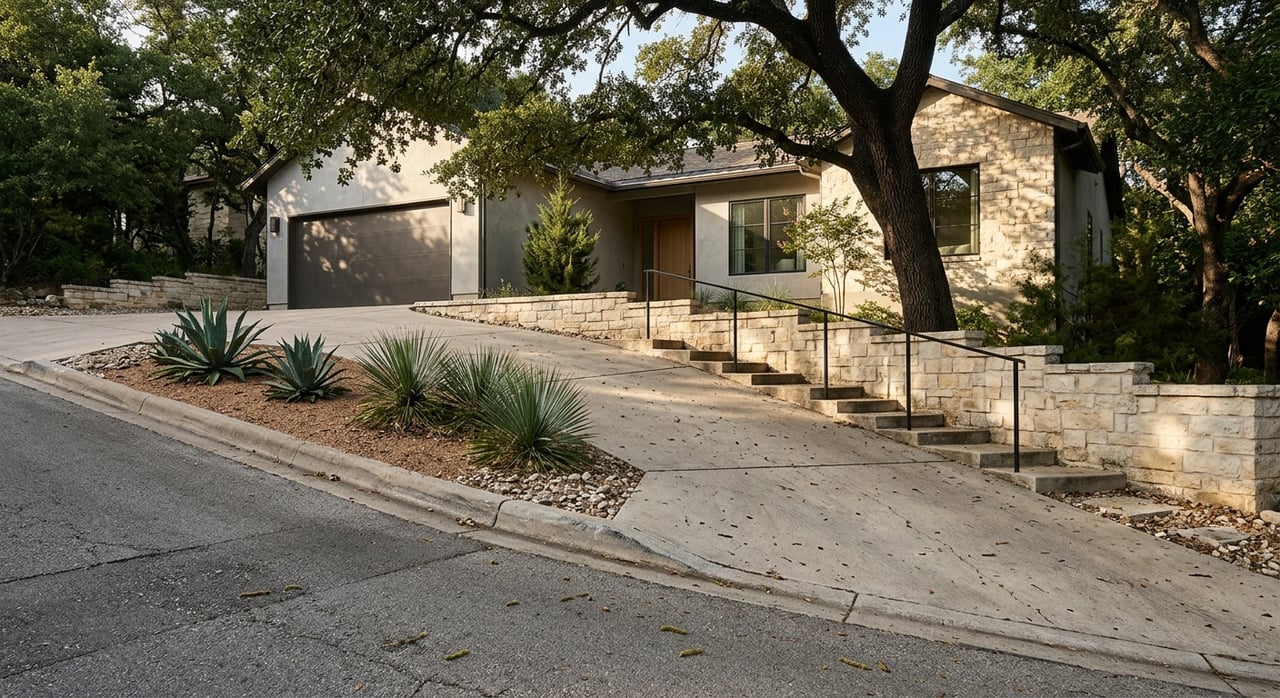
Curious what it actually feels like to live in Northwest Hills? If you are looking for a part of Austin that blends established homes, hill country terrain, mature trees, and practical access to everyday conveniences, this neighborhood often stands out quickly. Northwest Hills offers a lifestyle that feels residential first, with parks, winding streets, and a strong local identity. Let’s dive in.
Northwest Hills at a Glance
Northwest Hills sits in northwest Austin in Council District 10, and its general footprint is often described using familiar roads like MoPac, Loop 360, US 183, and RM 2222. The City of Austin notes there is no single official neighborhood map, so exact boundaries can vary depending on the source. In day-to-day terms, it is best understood as a broad west-of-MoPac area shaped by hills, canyons, and established residential streets.
That setting gives the neighborhood a distinct feel compared with flatter parts of Austin. The West Austin Hill Country landscape brings sloping streets, elevated pockets, and mature tree cover that can make one block feel very different from the next. If you value character over a master-planned look, that is part of the appeal.
Hill Country Setting Shapes Daily Life
Northwest Hills is closely tied to the terrain west of the Balcones Escarpment. The area is known for rugged hills, steep canyons, and higher elevations, which helps explain why views and topography come up so often in conversations about the neighborhood. Even if you are not on a view lot, the area often feels elevated and scenic.
That geography also affects the practical side of homeownership. Sloped lots, driveway grades, drainage patterns, and the orientation of a home can matter just as much as square footage. For buyers, that means it is helpful to look beyond finishes and think about how the land itself shapes the property.
Established Homes With Variety
One of the biggest draws of Northwest Hills is its housing stock. Most homes were built from the 1950s through the 1990s, and the neighborhood includes midcentury modern, ranch, contemporary, split-level, and new-traditional styles. Homes.com reports a median year built of 1975, with average single-family size around 2,170 square feet and a median lot size of 7,840 square feet.
In real terms, that often means you will see more variation here than in a newer subdivision. Some homes have been extensively updated, some have original character, and some lots have newer replacement homes. The result is a neighborhood that feels layered and lived-in rather than uniform.
Another important detail is that many homes in the area are not part of an HOA, though some sections do have one. That can create more block-to-block differences in curb appeal, exterior updates, and overall streetscape. For some buyers, that flexibility is a plus. For others, it simply means paying closer attention to the immediate surroundings of each home.
Outdoor Access Is a Real Lifestyle Perk
If you want nearby green space, Northwest Hills gives you several options. Bull Creek District Park and Bull Creek Bluff Neighborhood Park are both nearby in 78731, and District 10 also includes places like Mount Bonnell, Mayfield Park and Nature Preserve, Northwest Recreation Center, and Murchison Pool. That concentration of parks helps support an active, outdoors-oriented lifestyle without leaving the broader area.
The feel of that outdoor access is worth understanding, though. In Northwest Hills, greenbelt access does not always mean a casual open-use trail. Some natural areas are protected habitat with specific restrictions.
Bull Creek Preserve is a good example. The City of Austin describes the Forest Ridge Trail as rugged and limits use to hiking in small groups, while dogs, bikes, horseback riding, camping, and amplified noise are prohibited. During nesting season, the preserve is especially sensitive for endangered birds, so if you are picturing a flexible everyday trail system, it helps to know that some nearby natural spaces are managed more carefully.
Scenic Views and Elevated Surroundings
Northwest Hills is one of those Austin areas where elevation becomes part of the identity. Nearby Covert Park at Mount Bonnell offers one of the clearest reminders of that, and Mount Bonnell is identified as one of Austin’s most prominent geologic features at 785 feet. That broader setting helps explain why the neighborhood often feels view-oriented, even if not every street has panoramic overlooks.
For buyers, this can translate into meaningful differences from one listing to another. A home tucked into a canyon-like street may feel private and shaded, while another just a few turns away may sit higher with a more open outlook. That variety is part of what makes home shopping here more nuanced and often more rewarding.
Shopping and Errands Are Convenient
Northwest Hills is residential in character, but daily convenience is still a strong point. Grocery runs are supported by nearby options like Far West H-E-B on Village Center Drive and North Hills H-E-B on Research Boulevard. Rather than relying on one compact town center, the area works through several nearby errand nodes.
That pattern tends to fit how many people already live in Austin. You may drive a few minutes for groceries, coffee, or dinner, but you are not far from what you need. For many residents, that balance of quiet residential streets and practical convenience is exactly the draw.
Dining and Retail Nearby
For broader shopping and dining options, Northwest Hills benefits from access to larger retail destinations nearby. Domain NORTHSIDE, located off MoPac and Burnet, includes more than 130 retail stores and restaurants, 37 dining options, seasonal events, live music, and multiple coffee shops. The Arboretum, near 183 and North Capital of Texas Highway, adds another outdoor retail and dining destination with everyday essentials.
Together, these nearby centers reinforce the neighborhood’s identity. Northwest Hills is not trying to be an urban entertainment district. Instead, it offers a more residential home base with solid access to some of northwest Austin’s biggest shopping and dining hubs.
Getting Around Northwest Hills
Commute patterns in Northwest Hills are shaped by its location in Austin’s west-of-MoPac corridor. For many households, driving is still the default because of the area’s layout and the way errands and destinations are spread out. Access to roads like MoPac, Loop 360, US 183, and RM 2222 helps connect residents to downtown, north Austin, and other major employment areas.
Transit is still part of the picture for some households. CapMetro Route 661 Far West serves streets including Woodhollow, North Hills, Hart, and Greystone, with service to the UT campus at Dean Keeton and Whitis. If you want some flexibility beyond driving, that route can be a useful piece of the neighborhood transportation mix.
Community Identity Feels Strong Here
Northwest Hills is more than a collection of streets on a map. The Northwest Austin Civic Association, or NWACA, was formed in 1970 to give residents a voice with City Council and Travis County. That long-running civic presence adds to the area’s sense of continuity and involvement.
NWACA remains active through committees, neighborhood watch efforts, zoning and transportation input, cleanup events, recycling drives, and its annual 4th of July parade and Freedom Festival. The association says the first parade was held in 1973 and that it has become its biggest yearly event. That kind of tradition gives the neighborhood a grounded, engaged feel that many buyers are looking for when they want more than just a house.
What Northwest Hills Is Best Known For
If you had to sum up life in Northwest Hills in a few phrases, a few themes rise to the top:
- Established homes with character
- Mature trees and winding streets
- Hill country topography and elevated pockets
- Convenient access to parks and preserved natural areas
- Nearby shopping and dining without losing a residential feel
- A long-standing civic association and visible neighborhood engagement
That combination is a big reason Northwest Hills continues to attract buyers who want an older Austin neighborhood with variety and lifestyle appeal.
What Buyers Should Keep in Mind
Northwest Hills can be a strong fit if you want a neighborhood that feels established and scenic rather than newly built and uniform. You may find larger trees, varied architecture, and homes with renovation potential or already-updated interiors. You may also need to think more carefully about lot slope, access, and how one section of the neighborhood differs from another.
It can also be a good fit if you want outdoor access close by, but it helps to understand the difference between neighborhood parks and protected preserve land. And if walkability is high on your list, the area is generally more node-based than urban-core walkable. Some blocks are convenient to parks, shops, or bus stops, but daily life still leans car-first.
For sellers, Northwest Hills offers a story that many buyers respond to right away: mature landscaping, established architecture, hill country character, and practical access to both nature and city amenities. When those details are presented well, they can help a home stand out for more than just its stats.
Northwest Hills is not a one-note neighborhood, and that is exactly why it appeals to so many people. It offers an older Austin feel with topography, trees, and housing variety, while still keeping you close to parks, retail, and major road connections. If you are thinking about buying or selling here, working with a local guide who understands those block-by-block differences can make a real difference. Lockie Ealy can help you navigate Northwest Hills with neighborhood insight and a personalized strategy tailored to your next chapter.
FAQs
What is Northwest Hills like in Austin?
- Northwest Hills is an established northwest Austin neighborhood known for mature trees, hill country terrain, varied housing styles, nearby parks, and convenient access to major roads and shopping areas.
Are homes in Northwest Hills mostly older or newer?
- Most homes in Northwest Hills were built from the 1950s through the 1990s, with many remodels, updated properties, and some newer replacement homes mixed in.
Is Northwest Hills walkable for daily errands?
- Northwest Hills is generally more car-first than urban-core walkable, though some areas are convenient to parks, shops, and transit stops.
What parks are near Northwest Hills?
- Nearby outdoor options include Bull Creek District Park, Bull Creek Bluff Neighborhood Park, Mount Bonnell, Mayfield Park and Nature Preserve, Northwest Recreation Center, and Murchison Pool.
Does Northwest Hills have a strong community feel?
- Yes. NWACA has been active since 1970 and supports neighborhood involvement through events, committees, watch programs, cleanup efforts, and its long-running 4th of July parade and Freedom Festival.